The FlyDubai FZ1073 Incident: Aviation’s Hidden Insider Threat Vulnerability, What Must Change, and the Traveller Trust Crisis
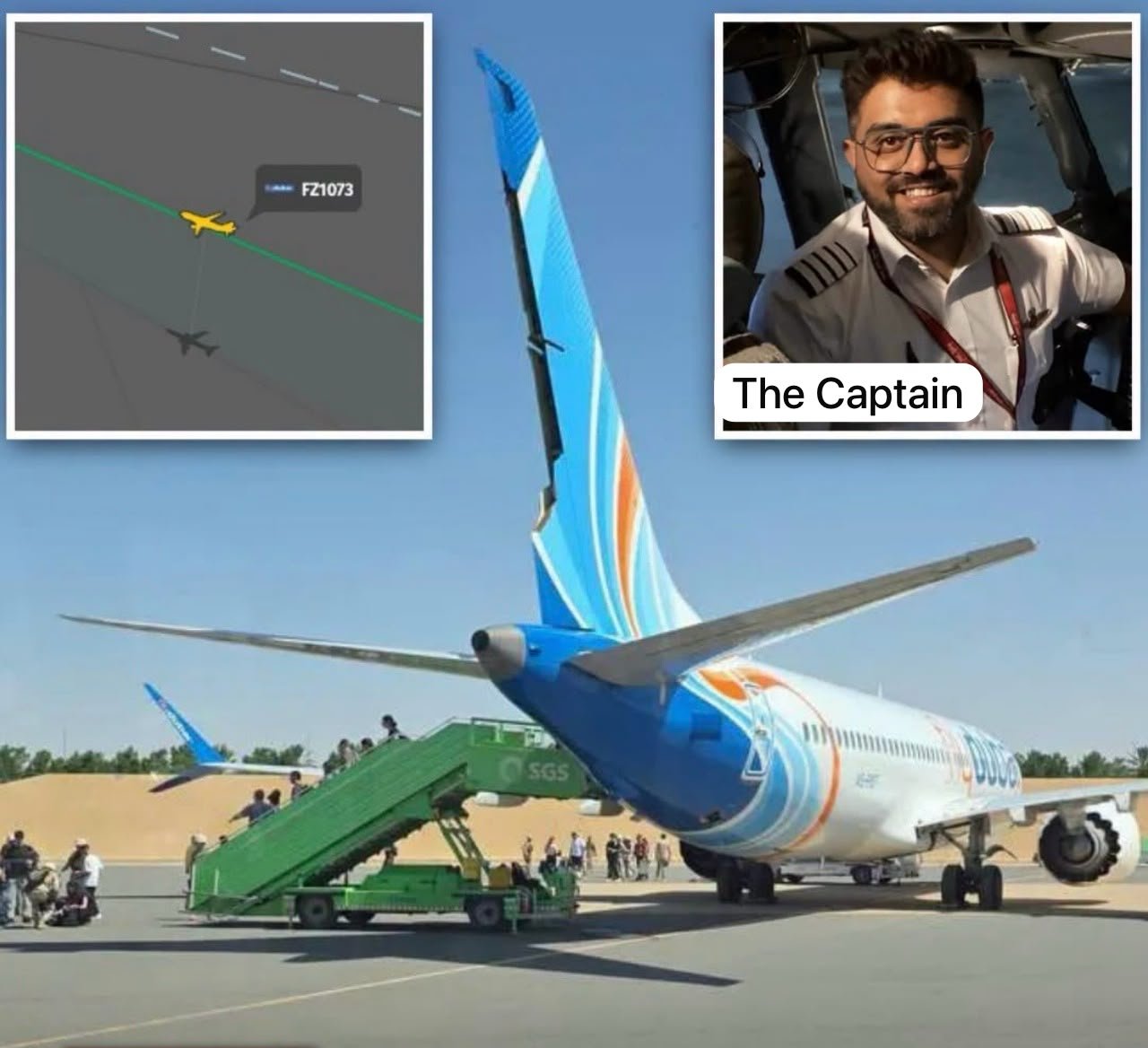
September 30, 2026, a Boeing 737 MAX 8 travelling from Dubai to Tel Aviv experienced what could have been catastrophic: a co-pilot attempting to crash the aircraft mid-flight. It didn’t become a disaster, but only by the thinnest margin.
The aviation industry has spent decades perfecting its defences against one kind of threat: external threats by hijackers and unauthorised intruders. This incident exposed a glaring blind spot in those defences.
What Happened
FlyDubai Flight FZ1073 departed Dubai at 3.05 AM local time carrying 174 passengers and 6 crew members, totalling 180 people on board. Less than two hours later, at cruising altitude, a violent altercation erupted in the cockpit. A co-pilot allegedly stabbed the captain, sending the aircraft into a catastrophic dive, plummeting more than 14,000 feet in less than 30 seconds, as suggested by initial publications. The aircraft transmitted both 7700 (general emergency) and 7500 (unlawful interference) codes. The captain, despite being stabbed and seriously injured, managed to open the cockpit door from the inside. This act ultimately saved everyone on board.
Please note that conclusive investigation details of what transpired on the flight, especially in the cockpit, as well as the actual speed at which it plummeted, are not yet available. Some of these details may become available later and may differ from what is currently circulating. This analysis is written on the assumption, based on initial information, that the first officer attempted to crash the plane by stabbing the captain. If this turns out to differ from what is established, these observations remain relevant for any actual scenario of this nature.
Passengers and off-duty pilots travelling on the flight, who happened to be present by pure chance, forced their way into the cockpit and physically subdued the alleged attacker. Aircraft control was secured, and a safe emergency landing was executed in Tabuk, Saudi Arabia.
Everyone survived.
What this reveals: they avoided a mass-casualty incident because of luck, not because of any systematic safety architecture.
The Dangerous Assumption Behind Post-9/11 Aviation Security
After September 11, 2001, the aviation industry implemented comprehensive new security measures: reinforced cockpit doors, secondary barriers, access protocols, and vetting procedures. These changes were designed to answer one question: How do we keep unauthorised people out of the cockpit, like hijackers?
The answer was excellent. Design it so that almost only pilots can grant access to the cockpit. The cockpit doors work exactly as designed. They keep out hijackers. They keep out passengers. They keep out anyone who doesn’t belong.
But they were never designed to answer a different question: What if the threat is already inside the cockpit, and they’re authorised to be there because they’re a crew member?
This is the insider threat problem. This incident revealed it in devastating clarity with Flight FZ1073. As reported, and writing on this assumption, the co-pilot who attempted to crash the aircraft had every legitimate right to be in that cockpit. He was trained, certified, and authorised. The reinforced door kept out unauthorised people perfectly; however, it was useless against him.
Why Insider Threats Are Different
The post-9/11 security model assumes the cockpit is a fortress that needs to be defended from outside, and indeed it is. However, a pilot who wants to sabotage an aircraft has access to all the systems, all the controls, and critically, legitimate authority to be in that space. The reinforced door that protects against external threats becomes irrelevant when the threat is already holding the controls and, even worse, shuts out potential response from other crew members in the cabin and passengers alike.
The aviation industry’s approach to crew vetting and pilot psychology is sound and outstanding; however, much of the practice is still built on institutional trust. Airlines, their pilots, and crew work as a team, as they should. The crew are assessed to be stable, well-adjusted professionals. Background checks happen, but they are not the kind of deep, continuous, invasive monitoring that would catch someone planning to deliberately crash an aircraft or assess whether someone is capable of it.
And the cabin crew? They are underprepared for responding to a crew member-initiated threat, especially not a pilot-initiated threat inside a locked cockpit. How could they? The door was supposed to keep threats out, not keep pilots in check.
What This Incident Will Force to Change
Airlines already conduct extensive crew training across multiple areas: Human Performance and Limitation, Crew Resource Management (how pilots and crew work together), Safety Management Systems training, Aviation Security training, Dangerous Goods training, and regular health assessments. But what is absent from this training is preparation for responding to a threat originating from within the flight deck itself, from a cabin crew member, co-pilot, captain or both pilots acting with hostile intent. Quite frankly, it is difficult and almost impossible to deal with threats from the cockpit; however, there exist certain items inside the cockpit that can be used or deployed against a threat when a pilot or co-pilot is acting with ill intent.
Visibility into the full scope of what happened inside that cockpit is not fully available, and the investigation is ongoing. But based on what this incident has exposed, three major shifts will come to the aviation industry, or at the very least, forced conversations on these areas.
1. Mandatory Crew Training on Insider Threats
Airlines will now need to increase and improve their crew training specifically on how to respond to threats from authorised crew members: pilots and cabin crew acting against the safety of the aircraft. Existing training (Human Performance and Limitation, Crew Resource Management, Safety Management Systems) already covers identification of erratic behaviour, incapacitation and procedures for challenging pilot decisions.
What does not exist is a clear protocol on how to actually intervene when a crew member, especially a co-pilot or captain, is demonstrably a threat to the aircraft. The questions are critical:
- How do cabin crew access a locked cockpit?
- What authority do they have to override a pilot’s commands?
- What is the escalation procedure?
- How do they physically secure the flight deck without creating further danger?
What must be added is specific intervention protocols: the practical steps crew members take when they identify an insider threat and act. However, the likelihood of achieving comprehensive protocols is slim, because this requires access to the cockpit and knowledge of how to fly a plane. In instances where the line like this is hard to achieve, the aviation industry is likely to focus largely on improving their current training, with the hope that one of the team members in the cockpit would be able to defend against dangerous situations emerging from the cockpit.
Nonetheless, this enhanced training will be uncomfortable. It requires crew members to constantly monitor each other and potentially act against colleagues and against the authority structure that commercial aviation depends on. But it’s now non-negotiable, and will cause considerable worry, suspicion and tension between flight crews. Nonetheless, it will happen.
2. Enhanced Monitoring and Deeper Vetting of Crew
Airlines will significantly increase surveillance and monitoring of their crew members, particularly pilots. Expect much more frequent, unscheduled and off-the-books background checks that go far deeper than current requirements. Psychological evaluations, financial audits, and personal-relationship assessments will become more rigorous and more frequent. Random health screenings and alcohol testing, conducted without advance notice, already exist within aviation but will be expanded and intensified, with pilots subject to more unannounced testing throughout their careers. This dual-purpose system serves both to ensure fitness for duty at any given moment and to create continuous verification that makes it harder for someone with compromised judgment, status or intent to operate undetected.
The shift is clear: from a largely trust-based system to a verification-based and suspicion-based system. Everyone is now a suspect. It will have significant privacy implications for pilots, and it will fundamentally change what it means to work in the cockpit.
But here lies another complexity: a pilot and crew members can be cleared to fly prior to departure, yet a lot can happen between that clearance and take-off, and again during the flight itself. How will such mid-flight or pre-flight psychological or behavioural changes be detected and managed beyond what is currently available? The vetting systems address what came before; however, they do not address what emerges in real time. Although the increased and improved crew training would supplement response protocols, there is still a risk as already addressed above.
3. Cockpit Redesign: The Hardest Problem (And the Least Practical)
This is where the real reckoning begins, but also where reality sets in hard. Aircraft manufacturers would need to fundamentally rethink how they design cockpits. The question is deceptively simple but architecturally brutal: How do you design a cockpit that protects against an intruder, but also a co-pilot or captain with hostile intent, while still allowing pilots to fly planes properly and keeping out unauthorised external threats?
Right now, a pilot or co-pilot has complete control of the aircraft systems. This authority is necessary: pilots need to be able to fly the plane. But a crew member with hostile intent also has the ability to deliberately crash the aircraft, and the current design offers no built-in failsafe or override capability.
Possible solutions might include:
- Dual-authorisation systems for critical flight control changes
- Automated systems that detect sudden, dangerous manoeuvres and limit pilot input
- Cockpit configurations that prevent a single pilot from accessing critical systems
- Real-time monitoring and telemetry that supports safe flying of aircraft if erratic behaviour is detected
However, a comprehensive cockpit redesign to address this threat would be almost impossible at this time, and frankly, may never materialise within the next decades. The Flight FZ1073 incident is realistically a one-in-a-million scenario, and aircraft design goals prioritise reducing aircraft weight and complexities, accommodating more passengers, and minimising fuel consumption. A major architectural redesign solely to address an extraordinarily rare insider threat does not align with commercial aviation’s fundamental economics or engineering priorities.
One might try to draw a comparison with 9/11. Yes, plane hijackings were also rare occurrences, yet structural changes were made to aircraft.
Here is the crucial difference: the post 9/11 redesign was relatively practical; reinforced cockpit doors, access protocols, and secondary barriers added security without fundamentally compromising aircraft function or design priorities. An insider threat redesign is categorically different. A pilot already inside the cockpit holding the controls cannot simply be locked out. Any meaningful solution would require architectural changes that conflict with every other design goal aviation has pursued for decades.
Most suggestions made above may already be in motion, but as some of this is based on dual authorisation, other questions that demand an answer are:
- Where both pilots are a threat, how would this function?
- Since the team, including the potential threat, will be trained on the same procedures for dealing with an insider threat on a flight, the threat has likely prepared to deal with such responses; so, what now?
The hard truth is that cockpit redesign at this point is aspirational rather than practical in the near or medium term.
4. New Roles Will Emerge
As airlines and manufacturers grapple with these changes and questions, new roles will emerge. Cockpit security specialists. Crew behavioural analysts. Systems designers focused specifically on insider-threat architecture. New certifications, new consultancies. The aviation industry will expand to accommodate the infrastructure it should have built years ago or at the very least, envisioned.
The Uncomfortable Truth
This incident exposed a systematic vulnerability that was always there, waiting to be exploited. Insider threat situations have happened in different forms previously, but for this case, the passengers were lucky that an injured pilot managed to open a door, that qualified individuals happened to be on board, and that the aircraft didn’t suffer major structural damage during the dive.
The aviation industry is justifiably proud of its safety record, but that safety record has been built on two assumptions: that external threats are the primary risk, and that pilots and crew can be trusted and can trust themselves, which of course is needed for an effective team. The first assumption led to excellent security architecture, and the second assumption led to a dangerous blind spot.
Both assumptions need to be reconsidered, or at the very least improved for practicability.
The cockpit door that keeps out threats from outside now needs to coexist with systems that manage threats from within. This will be expensive, and it will be complicated. It will also require uncomfortable conversations about safety and team members’ trust on flights and insider threats.
But the alternative is to wait for the next incident and pray that it ends as well as this one did.
Finally, the changes that are expected are not only because this situation happened, but also because of the political context within which this scenario played out.
The Impact on Travellers
Travellers around the world have been conditioned to trust flight crews to do their job. But with this incident, especially the publicity it has received, passengers are now left to deal with the aftermath: a suspicion of crew members. While insider threats have existed in many forms across various industries, this particular incident and the circumstances surrounding it will definitely affect travellers and the trust and perception of flight crews.
The uncomfortable reality is that passengers will board aircraft with a new awareness. They will scrutinise crew behaviour. They will wonder about the fitness, nationality, religion and mental state of those in the cockpit. They will question whether the people responsible for their safety can be trusted absolutely. This psychological shift, though perhaps justified, represents a significant change in the passenger experience.
Confidence in aviation has been built over decades. One incident, broadcast globally, can undermine that confidence in minutes. The industry now faces not only the technical challenge of redesigning safety systems, but also the human challenge of rebuilding trust while simultaneously implementing the very suspicion-based monitoring systems described above.
Travellers deserve safety, they also deserve transparency about what changes are being made, why they are necessary, and how the industry intends to balance security with the maintenance of the human trust that allows commercial aviation to function.

Written by
Jennifer Confidence
I tell Africa’s stories, all of them. Through documentaries, travel and deep conversations, I explore everything Africa, and I share what years of crisis management taught me about travelling safely.
Join my newsletter
New stories, travel updates and security briefs, sent straight to your inbox.