Things to Do in Cidade Velha, Santiago Island, Cape Verde: A Day Guide
#JennAcrossWestAfrica #30to30 #ECOWAS
Before you go: what to wear
Cidade Velha is hot, but the ground is the bigger challenge. The fortress sits on a plateau, and the walk down to the town centre is long, steep in places, and covered in rough volcanic rock. I wore sandals and found the walk painful on my legs. Wear closed-toe shoes with good grip, such as running shoes, trainers or light hiking shoes, and choose breathable pairs. Socks help prevent blisters. If you plan to swim or visit the beach, pack sandals to change into afterwards. Bring water, and try to do the walk in the cooler part of the day.
Things to do in Cidade Velha, Santiago Island, Cape Verde: the Forte Real de São Filipe, the UNESCO historic centre, Nossa Senhora do Rosário church, the Sé Catedral ruins, Rua Banana, Pelourinho, a grogue distillery, and the beach.
I returned to Cidade Velha for a full day exploring the town and the surrounding area of Santiago Island. Here are the highlights.
Before you go: what to wear
Cidade Velha is hot, but the ground is the bigger challenge. The fortress sits on a plateau, and the walk down to the town centre is long, steep in places, and covered in rough volcanic rock. I wore sandals and found the walk painful on my legs. Wear closed-toe shoes with good grip, such as running shoes, trainers or light hiking shoes, and choose breathable pairs. Socks help prevent blisters. If you plan to swim or visit the beach, pack sandals to change into afterwards. Bring water, and try to do the walk in the cooler part of the day.
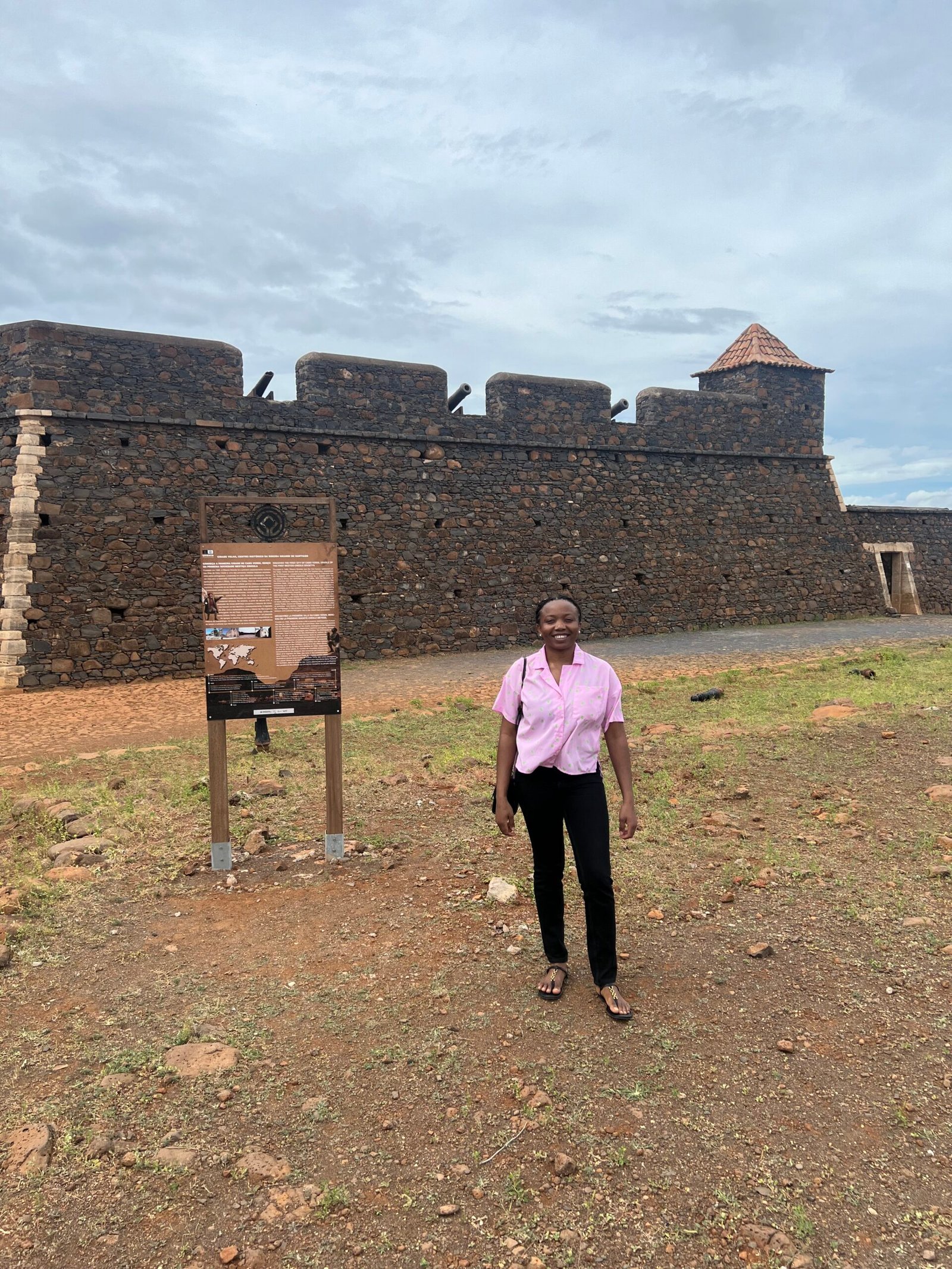
Forte Real de São Filipe (Fortaleza Real de San Felipe)
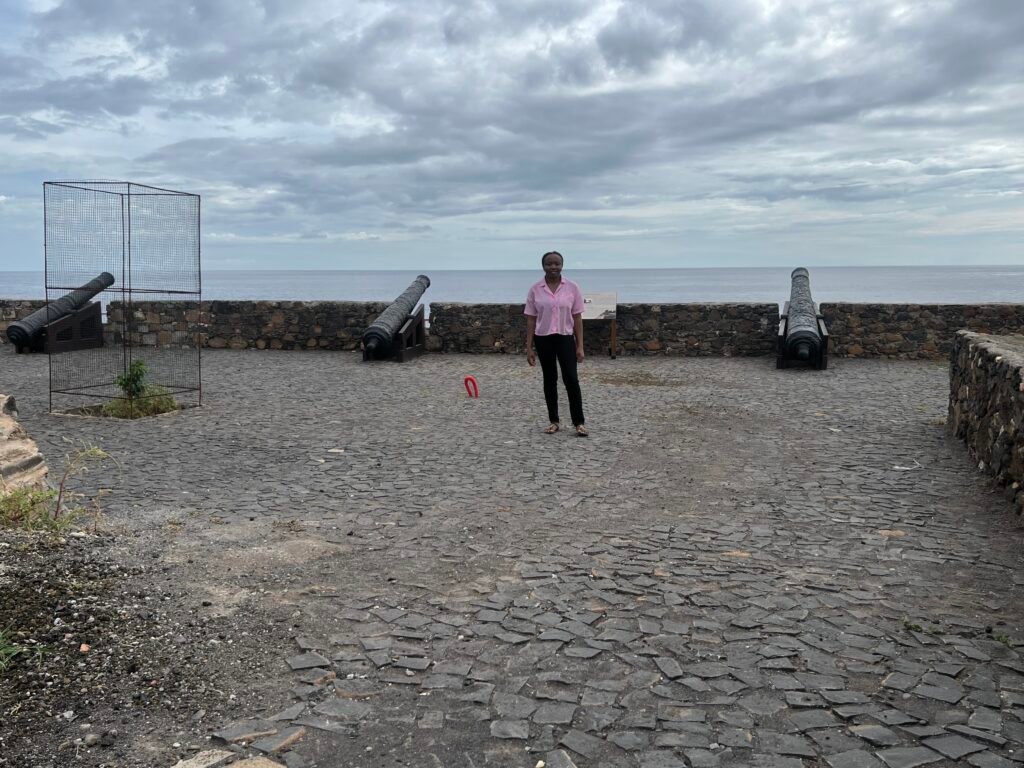
The fortress sits on a plateau about 120 m above the town. Most sources date its construction to the late 1580s to early 1590s, and it was built to defend against pirates and rival navies. It’s one of the best viewpoints in Cidade Velha, so bring your camera. Entry is usually paid. One tour listing mentions about €5, but confirm the current fee locally.
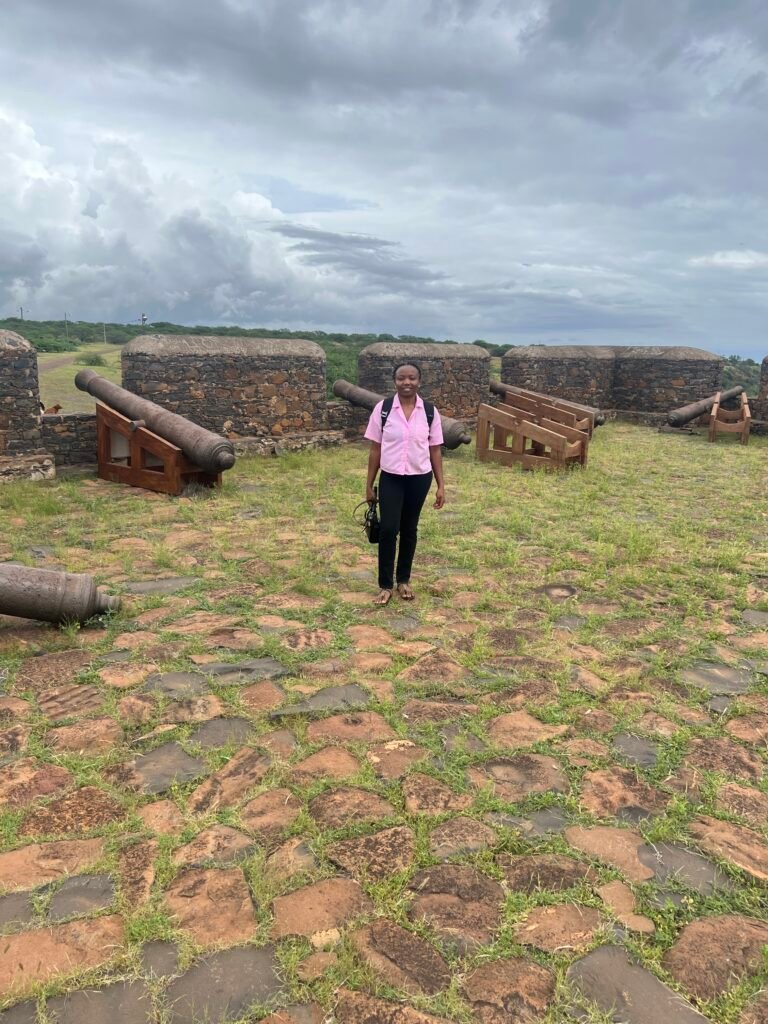
The walk down from the fortress to the town centre is the hardest part of the day. It’s long and rocky, so wear proper shoes, as described above.
Historic Centre of Ribeira Grande (Cidade Velha)
The town centre was inscribed as a UNESCO World Heritage Site in 2009. It’s Cape Verde’s only UNESCO site, and the whole historic centre is protected, so take your time with the streets and old buildings.
Forte de São Veríssimo (Forte São Veríssimo)
This 16th-century fort was built to protect the town from pirates. Some sources date it to around 1590, though the exact date is unclear. Restoration work began around 2024 to turn it into a museum. Entry is open and unpaid.
Pelourinho (Pillory)
This pillory in the main square is a short walk from the centre. Some sources date it to 1512, but the exact date is unclear. It’s linked to the history of the old slave market in Ribeira Grande.
Igreja de Nossa Senhora do Rosário (Our Lady of the Rosary Church)
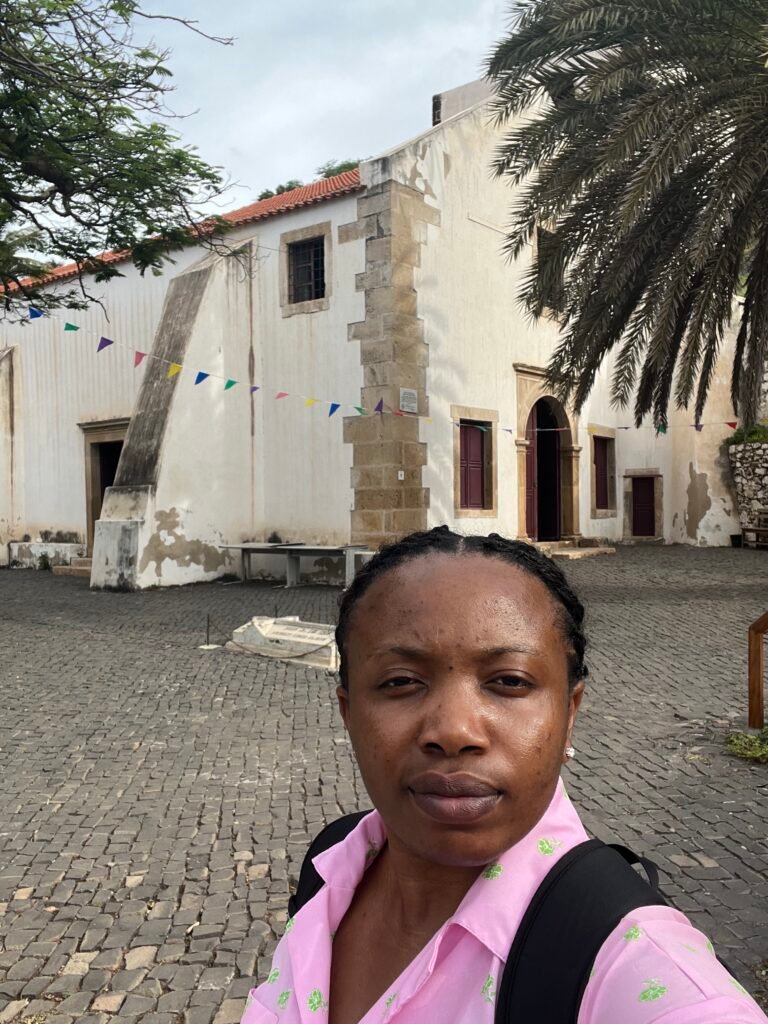
This is one of the historic centre’s standout buildings. Wikipedia dates it to around 1493–1495 and calls it the oldest colonial church in the world. That claim is widely repeated, but I haven’t confirmed it from a primary source, so treat it as unverified.
Sé Catedral (ruins)
These are the remains of the former cathedral, built in stages from about 1556 to 1693. Pirate attacks around 1700–1712 left it in ruins, though sources differ on the exact dates. When I visited, it was under renovation, and government plans for reconstruction have been mentioned.
Rua Banana (Rue Banana)
Walk along this street of traditional stone houses with thatched roofs. It’s often described as one of the oldest streets built by the Portuguese in the tropics. Sources word this claim differently, so it’s best described as “one of the oldest” rather than “the first.”
Convento de São Francisco (Convent of St Francis) (recommended by visitors, not visited by me)
This convent is a separate site from the church. Some sources give its construction date as 1657, but the exact date is unclear. It sits on a slope outside the town centre, and much of it is now in ruins.
Cabral & Martins Grogue Distillery and Cruzeiro Restaurant (recommended by visitors, not visited by me)
This sugarcane distillery makes grogue, Cape Verde’s traditional sugarcane spirit, and has an on-site restaurant. Visitors on TripAdvisor describe a guided tour with a tasting at the end. One reviewer mentioned paying about 200 CVE per person for a tour, though prices may have changed. It’s a short walk or drive from the centre, and reviewers say it’s slightly hidden, so use a map. TripAdvisor lists its hours as 9:00 AM to 5:00 PM on Wednesdays, but check before you go.
Cidade Velha Diving (passed by, not explored)
This PADI, SSI and TDI dive centre is at R. Direita de São Sebastião 13 in Cidade Velha. It offers everything from Discover Scuba Diving to advanced courses, and it’s well reviewed online. If you dive, it’s worth a visit.
Sugarcane farms
Drive around the island and you’ll pass sugarcane fields. I haven’t confirmed whether these supply distilleries such as Cabral & Martins, so I’m not stating it as fact.
Beach area
Spend some time at the beach to finish your day. Remember your sandals for this part.

Written by
Jennifer Confidence
I tell Africa’s stories, all of them. Through documentaries, travel and deep conversations, I explore everything Africa, and I share what years of crisis management taught me about travelling safely.
Keep reading
More stories
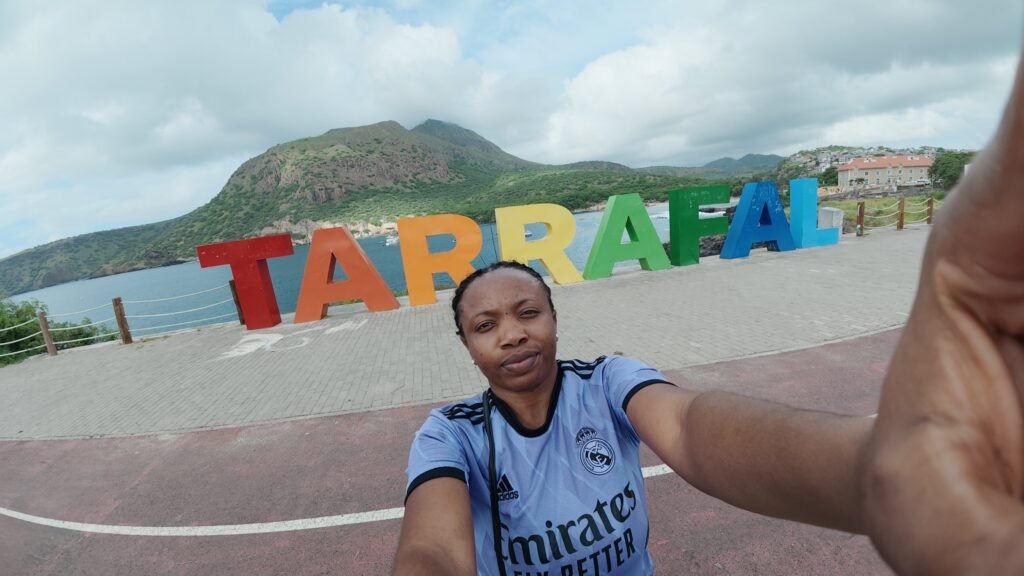
- A Day Trip North From Praia to Tarrafal#JennAcrossWestAfrica #30to30 #ECOWAS Most people who visit Santiago, the largest island in Cabo Verde, spend their time around Praia. But if you…
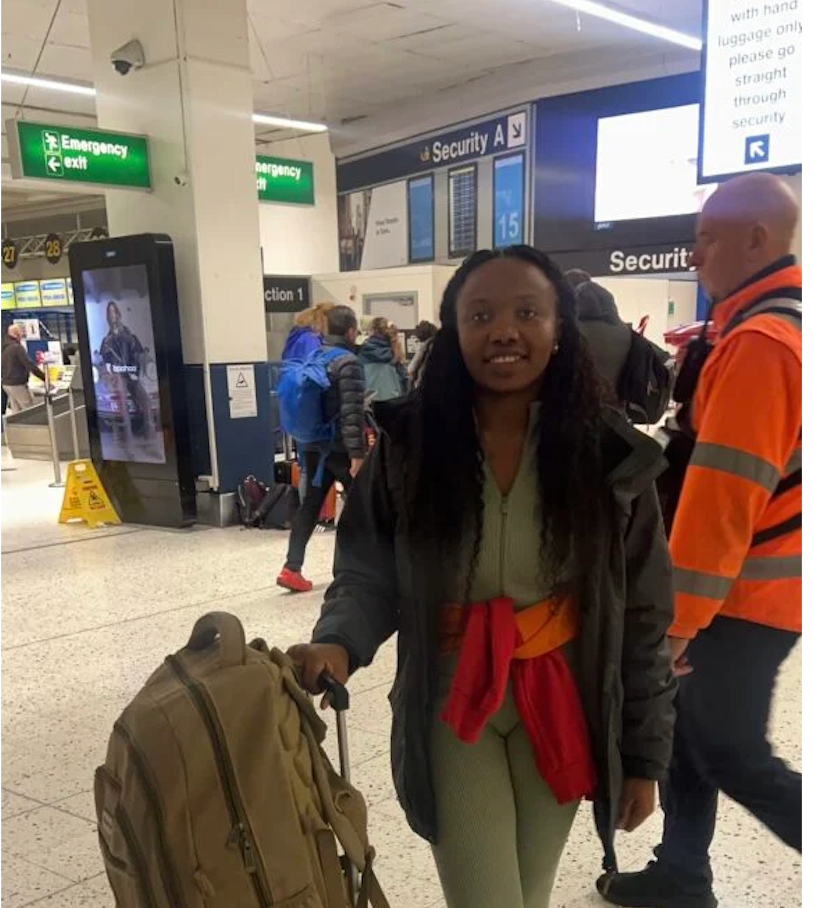
- Transiting Through an EU Airport Without a Schengen Visa: My Experience in Lisbon#JennAcrossWestAfrica #30to30 #ECOWAS What I learned the hard way, and how to avoid the same confusion. I recently transited through Lisbon on…
- 5 Must-Do Activities at Senegal’s Pink Lake (Lac Rose)5 Things to Do at Senegal’s Pink Lake (Lac Rose) If you’re planning a trip to Senegal, Lac Rose, the Pink Lake,…
Join my newsletter
New stories, travel updates and security briefs, sent straight to your inbox.